
LIVIGNO, Italy — In the mad rush to find an answer for Friday night’s Malinin Meltdown, blame is already scattering across social media like a virus.
It’s NBC/the media’s fault for making Ilia Malinin the face of the Winter Olympics.
Or he was tired from the team event.
Or it was the influence of social media and the “Quad God” bit over-inflating his ego.
Or it was his father’s coaching.
Or, as Malinin let slip during an unfiltered moment in the “Kiss and Cry” area awaiting a score he knew would be awful, it was U.S. Figure Skating’s fault for not bringing him to Beijing four years ago so he could taste the Olympic experience and get the nerves out of his system.
Choose your own adventure as to why Malinin went from overwhelming favorite to off the podium entirely in a matter of minutes. Maybe there’s an element of truth in each. Maybe it’s all nonsense.
But sports exist inside an ecosystem where there’s no way to definitively diagnose why someone who has been the best in the world at their craft reached the Olympic stage and choked. We can come up with all kinds of good theories for why someone that talented and successful reaches the biggest moment of their career and doesn’t perform, but they’re simply theories.
We’re talking about human beings, not machines. Things happen.
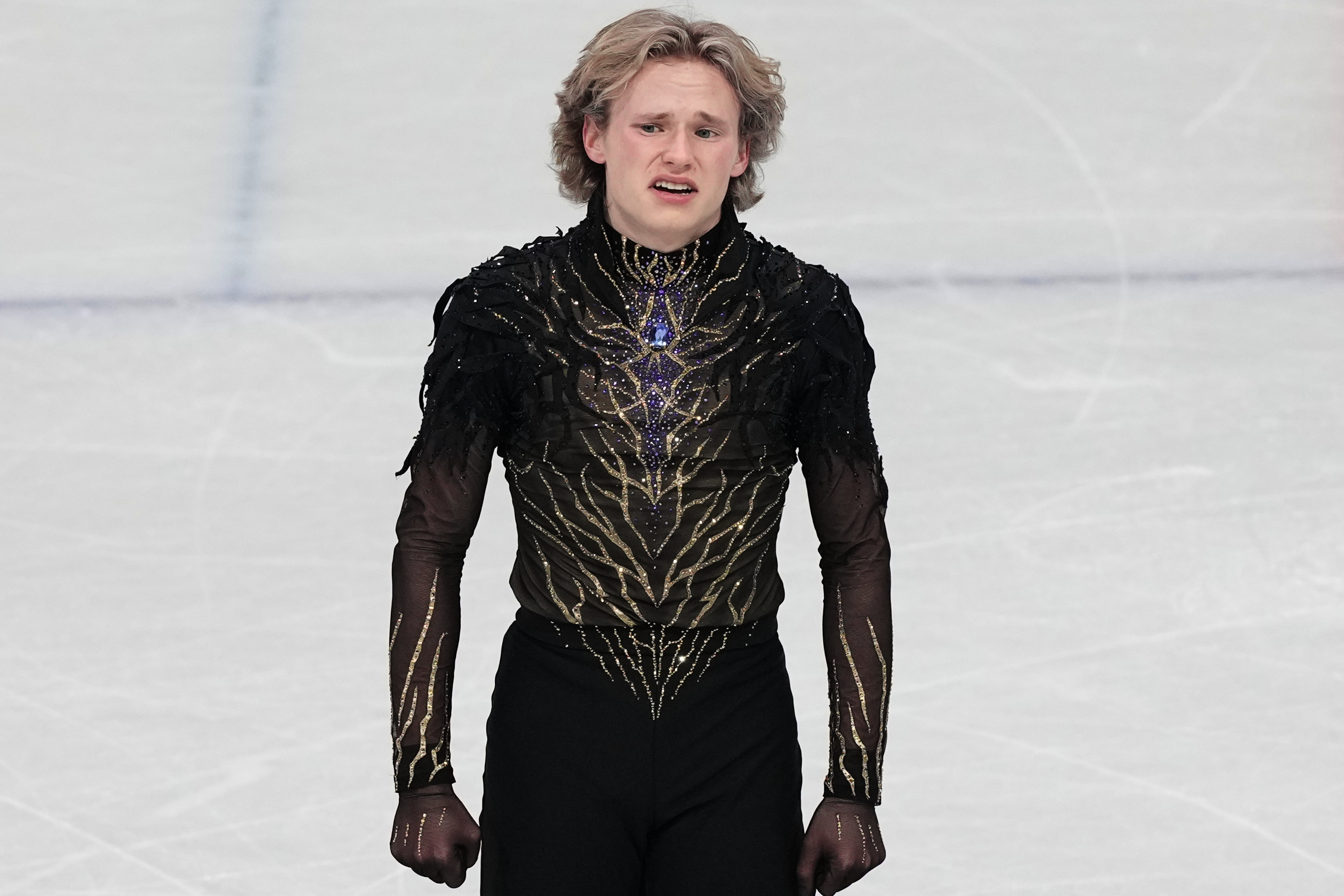
And we should be thankful for that. Because even if we can’t fully explain it, seeing failure occasionally is the only way we can know what greatness truly looks like.
Most people who have played sports competitively know what it’s like to choke. Maybe it was a missed free throw that lost the high school conference championship or a 5-foot putt that lipped out with $20 on the line in your weekly golf foursome or falling apart in the finals of your local club’s tennis tournament after serving for the match.
No matter how big or small the stakes in a larger sense, they’re huge to everyone in those moments. You don’t need months of media coverage or a full stadium to put yourself in those shoes, to have a small sense of what Malinin must have been feeling as he skated onto the ice Friday night.
Pressure does not come from NBC ad campaigns or Instagram comments. It comes from the knowledge of what you’ve invested in yourself and, for any Olympian, the understanding that four years is a very, very long time to wait for another opportunity.
Malinin falling apart is more relatable than anything he can do on the ice. It’s those who mostly seem impervious to the weight of the moment that offer a far more interesting psychological study.
Tiger Woods is probably, to this point, the greatest clutch athlete of my lifetime. He didn’t win every major golf tournament, of course, and he didn’t always come through when put under pressure. Nobody does.
At so many flashpoints of his career, though, Woods delivered the shot or made the putt that others could not in a sport where choking is pretty common. As much reverence as we had for his achievements and his brilliance, it helped us recognize what a unique athlete he was because we had seen Greg Norman choke away the Masters or Phil Mickelson make one bad decision after another when he got in contention at a U.S. Open.
Their failures provided the context for what’s normal. They helped explain why Woods was one of a kind.
And perhaps four years from now, if Malinin returns and wins gold in France, his own greatness will emerge in the contrast between what he was Friday night and what he’ll become.
But, in the end, this stuff is supposed to be hard. The hype and the media pressure is part of the journey. If none of that existed, you could hold these events at a local park, nobody would notice, sponsors wouldn’t invest money in athletes and nobody would have much incentive to spend their life training to be a part of it.
That wouldn’t be the Olympics, though. And guess what? Athletes would still choke because they still care. It’s maybe the only part of the human experience of sports most of us can understand.
It’s because the Olympics are so big, so rare and so difficult to win that anybody gets drawn into watching in the first place.
That means every day, you see a dozen people whose lives are changed by winning a gold medal. You see dozens more who leave in devastation. You need both sides of that emotional spectrum to understand why we hold winning on this stage in such high regard.
This collapse is now part of Malinin’s story, but it’s not the end of it unless he wants it to be. The search for a reason may be useful to him when he regroups and looks toward 2030, but it is not necessarily a solution either.
He choked on Friday for reasons that will be hard to pinpoint, and it absolutely stinks for him, for his fans and for those in his orbit who banked on him winning a gold medal. But in the end, we have to be thankful for all of it.
Because without an occasional failure this epic, it would be hard to know what true greatness really means.